Stay in the Know About Salem
Get upcoming events, things to do & seasonal news straight to your inbox.
Sign Up Now


Photo Credit: @creativecollectivema

Photo Credit: @creativecollectivema


Photo Credit: @creativecollectivema
Photo Credit: Jess Shada

Photo Credit: Jess Shada
Photo Credit: Jess Shada
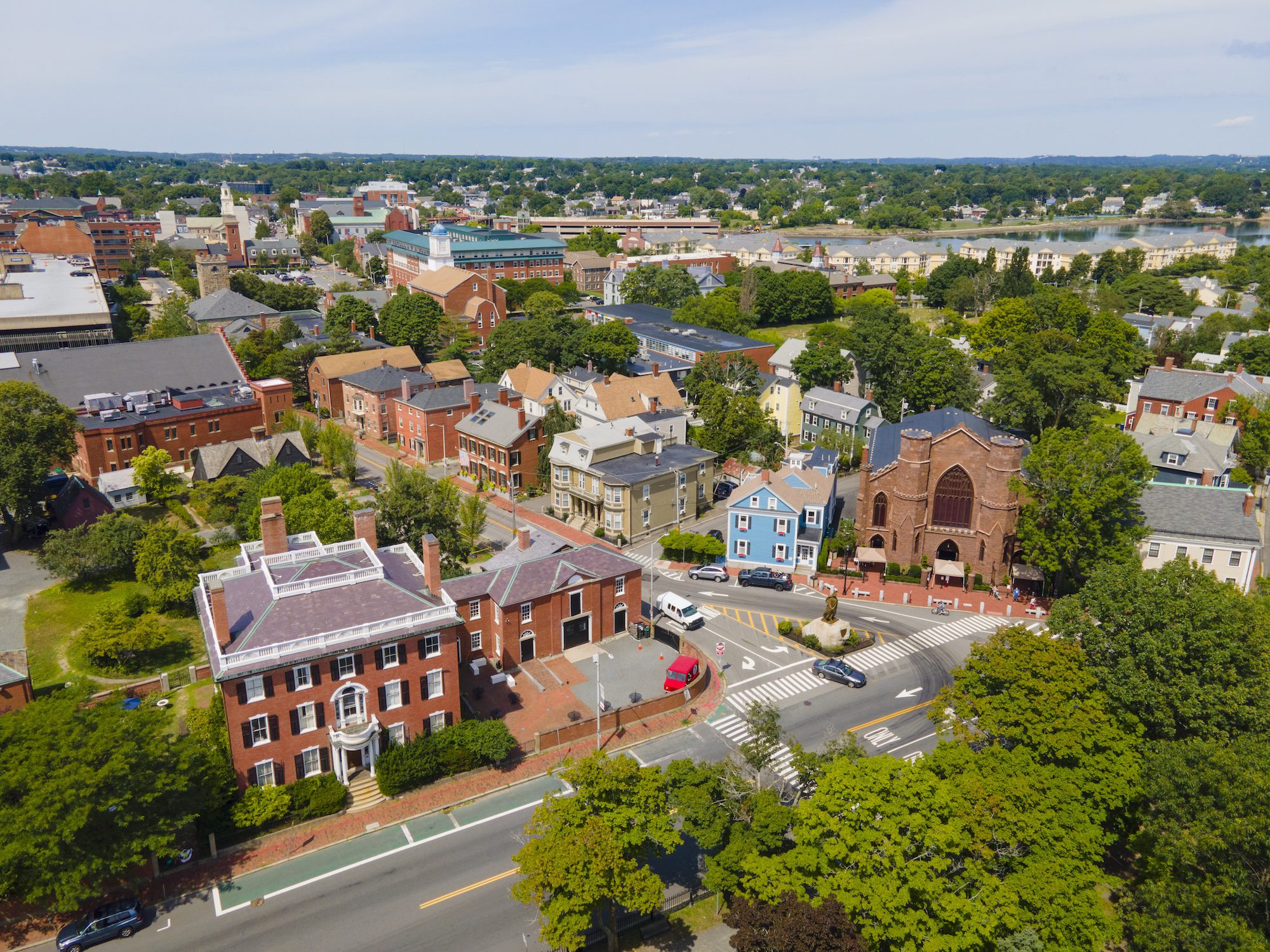

Photo Credit: Kathy Tarantola


Statues of Salem: The Stories Behind Some of Witch City’s Most Recognizable Landmarks
September 22, 2026
Written By:
Brittany DiCologero
Salem’s history is layered throughout downtown as historic homes and centuries-old buildings stand alongside modern shops and restaurants. And along with museums and historic sites, monuments throughout the city commemorate the people and stories that have shaped Salem over the years.
Some of these stories are told through Salem’s statues and public art. From a seventeenth-century settler and one of America’s best-known authors to a pioneering abolitionist and a beloved TV witch, these statues represent very different chapters of Salem’s past and present. Better yet, each of these landmarks is located right downtown, making it easy to discover them while exploring Salem on foot.
Here are four statues to look for during your next visit to Salem:
Roger Conant Statue
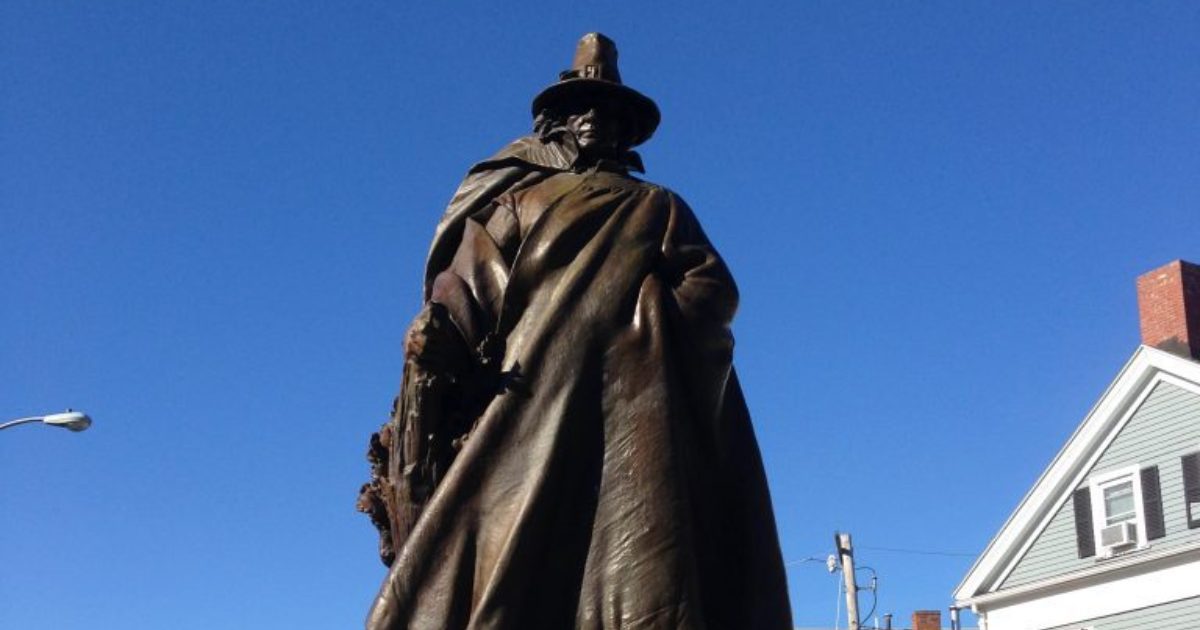
One of Salem’s most recognizable statues stands right across from Salem Common, and next to the Salem Witch Museum. With his wide-brimmed hat and dramatic cloak, Roger Conant is sometimes mistaken for a witch, but the statue actually depicts one of Salem’s earliest English settlers.
Roger Conant was born in England in 1592 and arrived in Plymouth Colony with his family in the 1620s. In 1626, Conant led a group of settlers to Naumkeag, the site of an existing Massachusett village and the community that would later become Salem. John Endecott assumed leadership of the settlement in 1628, but Conant remained in the area and continued to participate in local affairs. He later lived in what is now Beverly and died in 1679.
The bronze statue was created by sculptor Henry Hudson Kitson, who also created the well-known Lexington Minuteman statue on Lexington Battle Green. Commissioned by Conant’s descendants through the Conant Family Association, the statue was dedicated in 1913. Because no known image of Roger Conant survives, Kitson depicted him as a Puritan figure wearing a broad-brimmed hat and flowing cloak. The figure stands atop a large boulder and grasps the trunk of a tree, reflecting an early twentieth-century interpretation of Salem’s colonial beginnings.
Charlotte Forten Grimké – The Moving Spirit of Love
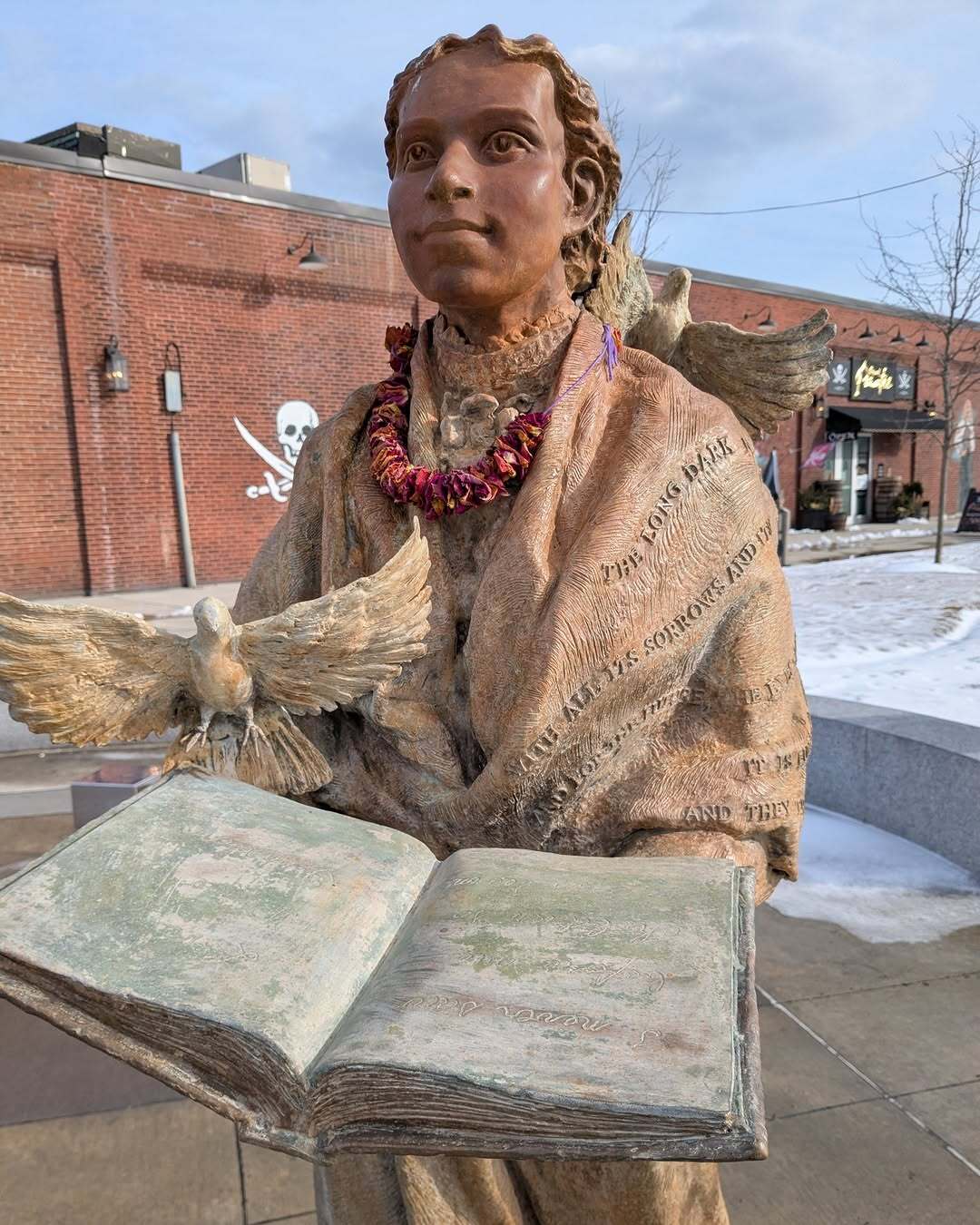
One of Salem’s newest statues honors Charlotte Forten Grimké, an abolitionist, educator, writer, poet, and activist whose remarkable life included several important years in Salem.
Born into a prominent Black abolitionist family in Philadelphia in 1837, Charlotte Forten came to Salem as a teenager in search of educational opportunities that were unavailable to her in segregated Philadelphia. She attended Higginson Grammar School before enrolling at the Salem Normal School, now Salem State University. In 1856, she became the institution’s first African American graduate.
Forten went on to teach in Salem Public Schools, becoming the first Black teacher in the city’s public school system. During the Civil War, she traveled to the Sea Islands of South Carolina, where she taught formerly enslaved students. Throughout her life, she also used her writing to advocate for abolition, racial equality, women’s rights, and education.
Salem named Charlotte Forten Park in her honor in 2019, and the city later commissioned a permanent memorial for the space. Created by artist Ai Qiu Hopen of Humanity Memorial Inc., The Moving Spirit of Love is a life-size bronze statue designed to celebrate Forten’s life, activism, and vision for a more equitable future. Its waterfront setting at 289 Derby Street by the South River Harborwalk is particularly fitting as Forten’s journals document her affection for Salem’s natural landscape, including walks along the ocean and harbor.
Nathaniel Hawthorne Statue
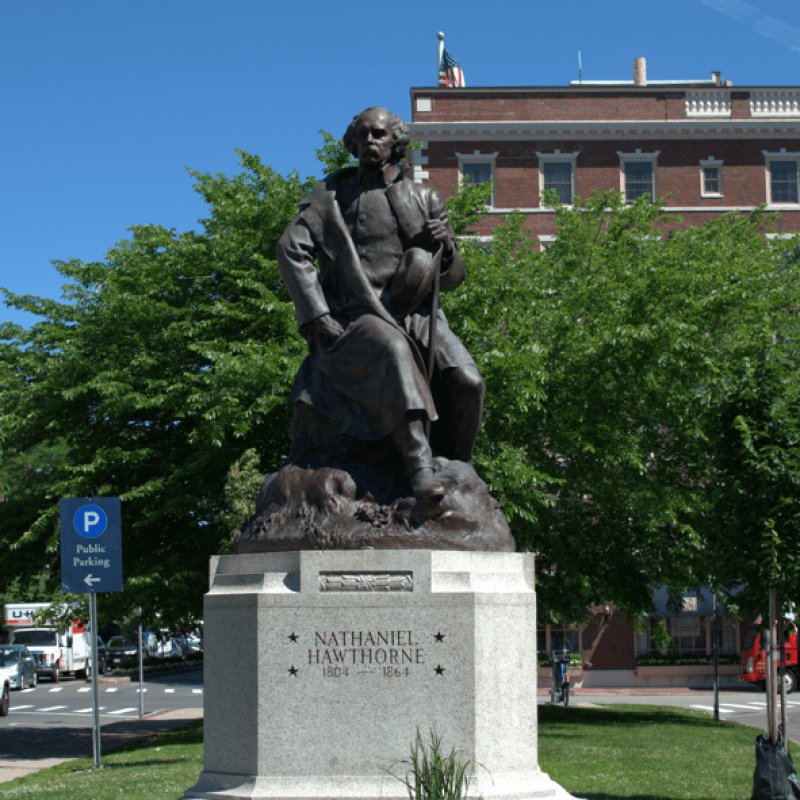
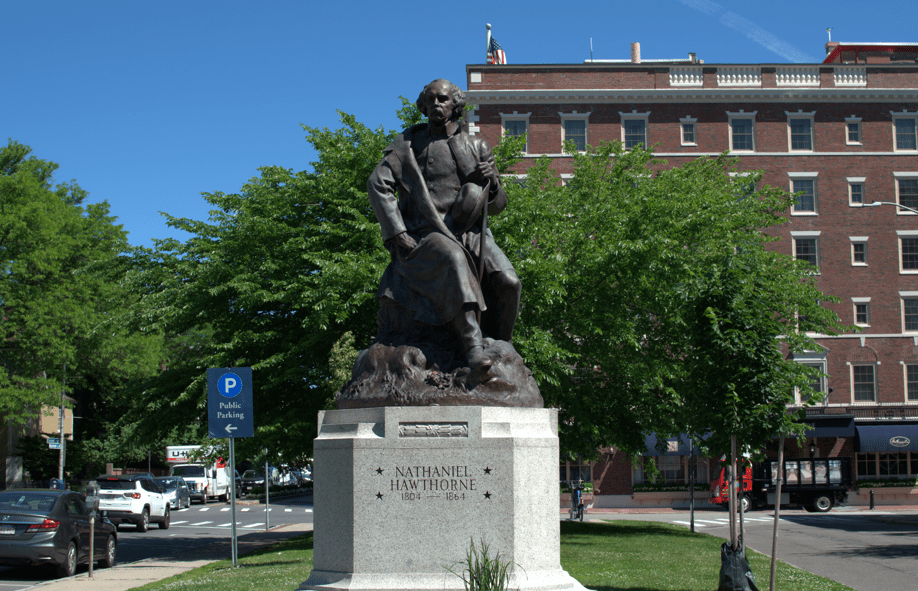
Nathaniel Hawthorne is one of the most famous writers associated with Salem, and his complicated relationship with his hometown influenced some of the most celebrated works in American literature.
Born in Salem in 1804, Hawthorne was a novelist and short-story writer best known for works including The Scarlet Letter and The House of the Seven Gables. His family had deep roots in Salem, including a direct connection to the Salem Witch Trials, as his ancestor John Hathorne served as a magistrate in 1692. Nathaniel later added a “w” to the family name, distinguishing himself from this part of his ancestry. Salem and its Puritan history would become recurring influences in his writing and a major part of the author’s complex relationship with the city.
Salem’s Nathaniel Hawthorne statue was created by noted American sculptor Bela Lyon Pratt. Commissioned by the Hawthorne Memorial Association in 1910 and completed in the 1910s, the sculpture portrays Hawthorne later in life, seated on a rock. Pratt reportedly chose the pose in reference to Hawthorne’s habit of walking alone near the sea and spending time looking across the water. The statue was ultimately installed and dedicated in Salem in 1925, the same year the nearby Hawthorne Hotel opened.
The bronze statue is located at 20 Hawthorne Boulevard, across from the hotel. After stopping by the statue, you can continue exploring Hawthorne’s Salem at locations like his birthplace and the Turner-Ingersoll Mansion at The House of the Seven Gables and the Salem Custom House, where he worked before publishing The Scarlet Letter.
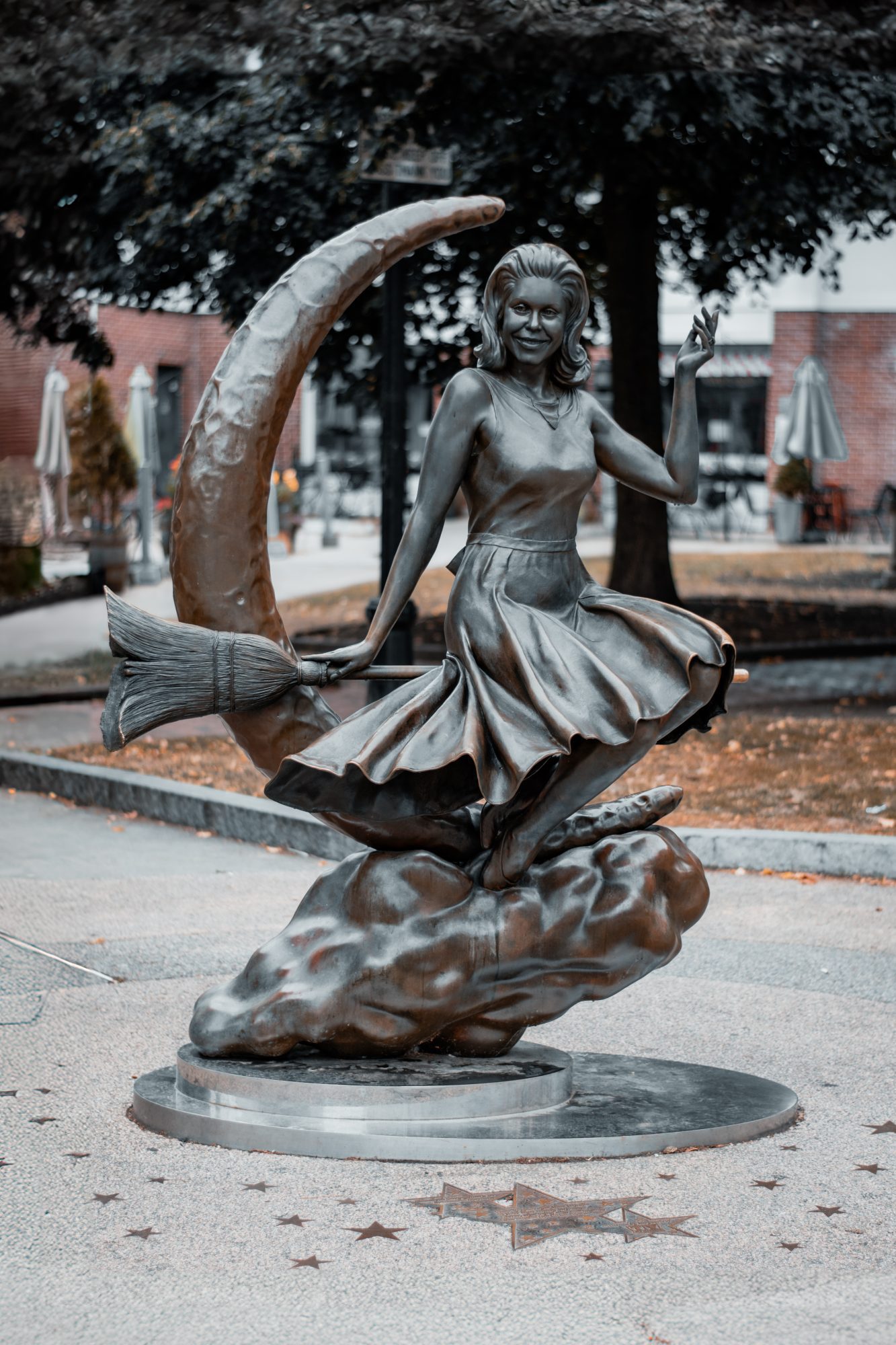
Samantha from Bewitched
Not every Salem landmark dates back centuries. One of the most photographed spots in the city celebrates Salem’s place in TV history with a fictional witch.
The bronze statue in Lappin Park depicts actress Elizabeth Montgomery as Samantha Stephens, the magical main character of the television sitcom Bewitched. The series, which originally aired from 1964 to 1972, brought its cast to Salem in 1970 after a fire interrupted production at its Hollywood studio. The resulting “Salem Saga” sent Samantha and Darrin to Salem for a witches’ convention, with scenes filmed at recognizable locations around the city, including The House of the Seven Gables and the Hawthorne Hotel.
Decades later, the connection between Bewitched and Salem was commemorated with a permanent downtown landmark. In 2005, TV Land gifted Salem the six-foot-tall bronze statue of Samantha in celebration of the show’s 40th anniversary. The statue depicts Montgomery as Samantha sitting on a broom in front of a crescent moon. While its installation initially prompted debate about the commercialization of Salem’s history, Samantha has since become a familiar part of the downtown landscape and perhaps the city’s most popular photo opp.
Find the Bewitched statue at the intersection of Essex and Washington Streets (237–245 Essex Street). Located directly along the Essex Street Pedestrian Mall, it is an easy stop while exploring downtown shops, restaurants, and attractions.
The next time you explore Salem, keep an eye out for these statues along the way. You may find that some of the city’s most interesting stories are hiding in plain sight!

Privacy Policy | © 2026, All Rights Reserved. Website designed and developed by Sperling..