Stay in the Know About Salem
Get upcoming events, things to do & seasonal news straight to your inbox.
Sign Up Now


Photo Credit: @creativecollectivema

Photo Credit: @creativecollectivema


Photo Credit: @creativecollectivema
Photo Credit: Jess Shada

Photo Credit: Jess Shada
Photo Credit: Jess Shada
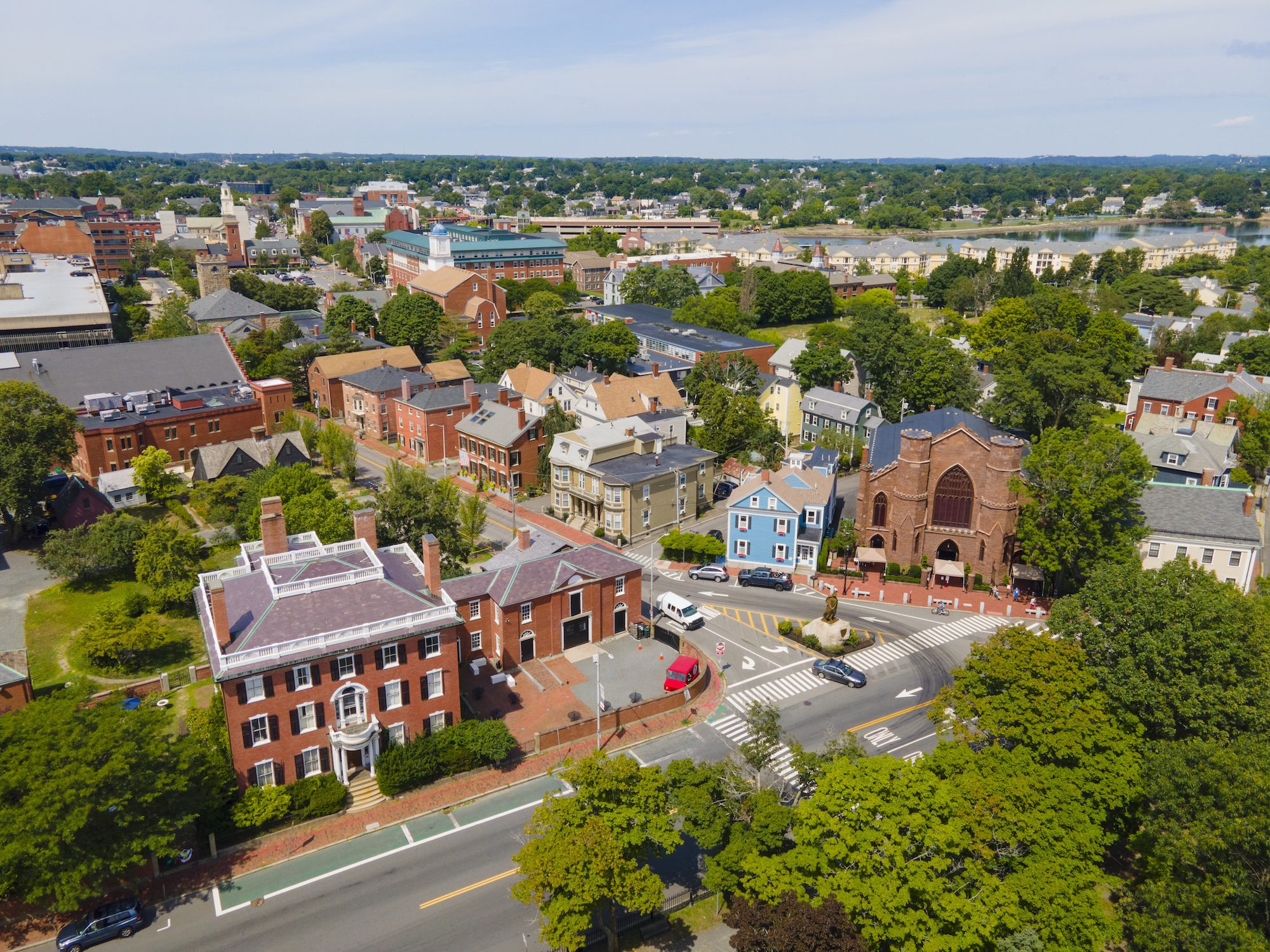

Photo Credit: Kathy Tarantola


Behind the scenes of PEM’s Salem Walking Tours
October 10, 2025
Written By:
Bridie O'Connell
SPONSORED CONTENT | Written by Peabody Essex Museum
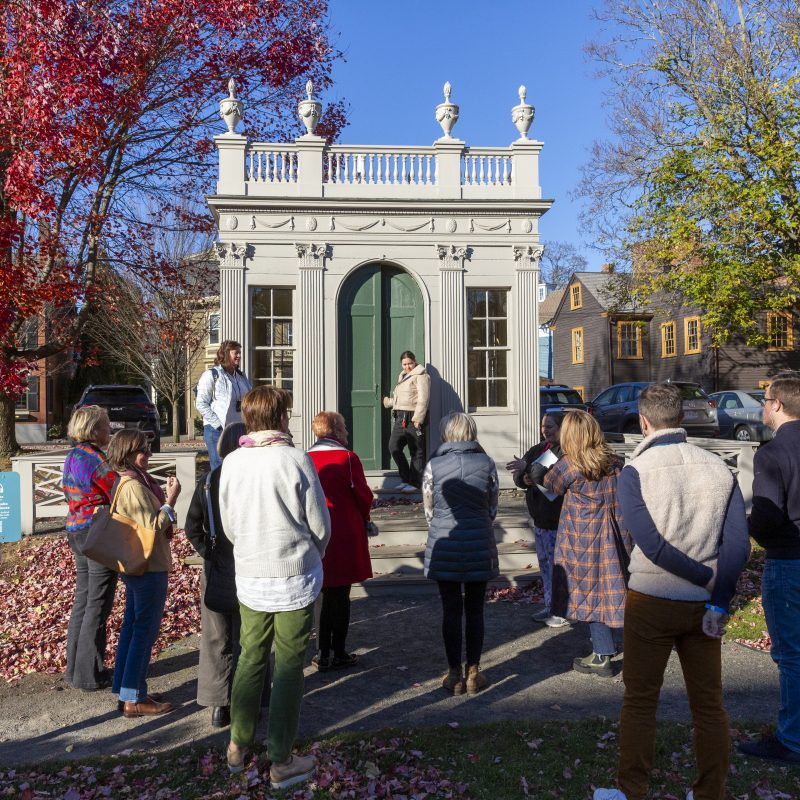
Visitors to Salem are getting out and about this fall on walking tours with expert guides from the Peabody Essex Museum. Brick by Brick: Salem’s Hidden Architectural Stories offers an in-depth look at historic buildings and landmarks across downtown Salem, from a millionaire’s mansion to a working-class sailor’s house. Sinister Streets: Witch Trials, Murders and Literary Legends highlights some eerier events from the city’s history, like the infamous Salem Witch Trials. PEM’s tours are the only offerings among Salem’s many tour options that include a peak inside historic buildings.
Tarantola/PEM.
On an October morning, crispness crept into the shady side of the street and tourists were chock-a-block. “I was forewarned that Salem gets kooky starting October 1, but this is pretty wild,” said Merle, who came up from Florida with his wife Caren.
PEM’s walking tours were created to give a sense of how people lived during the last 400 years in Salem. The Brick by Brick architectural tour examines how building materials and stylistic choices tell a story of a particular culture, time, place and family. Along the way, visitors learn how the city’s history of revolution and maritime trade shaped its people and architecture. And, of course, the events of 1692 are woven throughout.
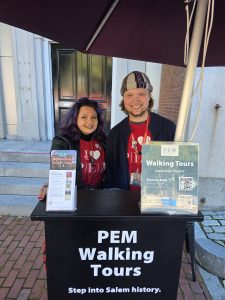
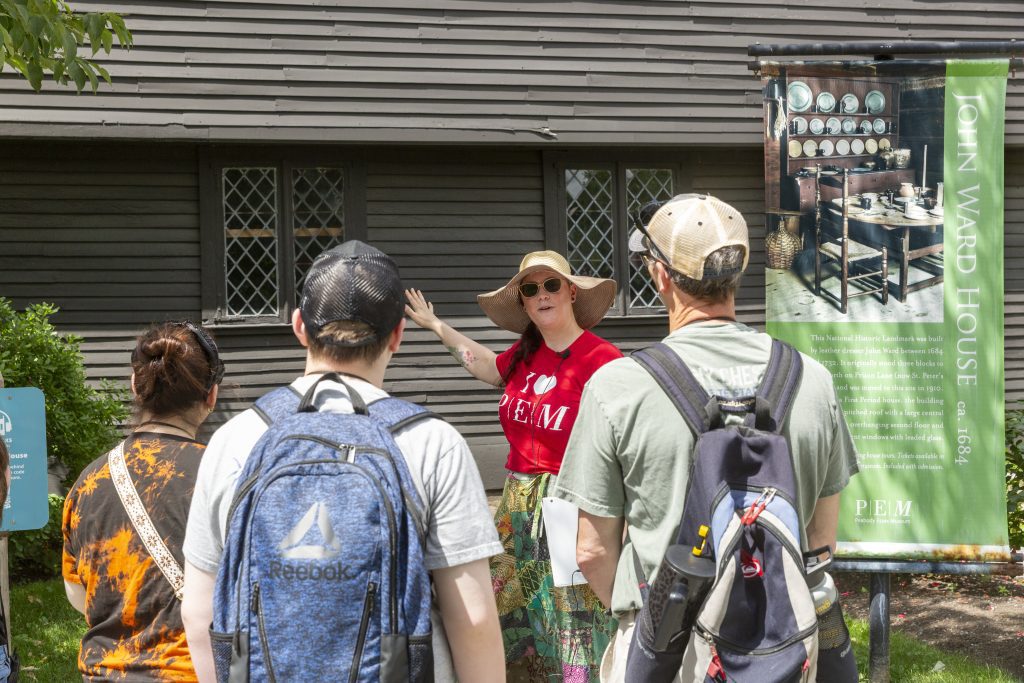
As guide Ben Feron gathered the crowd in front of East India Marine Hall, he started at the very beginning, going back to the museum’s founding in 1799 and explained that objects brought by the PEM’s entrepreneurial seafaring founders could range from an ostrich egg to a piece of jewelry. Introduction complete, the group went on to the John Ward House, built in 1684 for a successful leatherworker and originally located opposite the jail used during the Salem Witch Trials. With its picturesque, moody appearance and diamond-paned windows, it’s a destination for the Instagram set. Our tour group heaped words of encouragement on a bride and groom getting their photo taken in front of the red roses set against the darkly painted clapboards, an hour before they tied the knot.
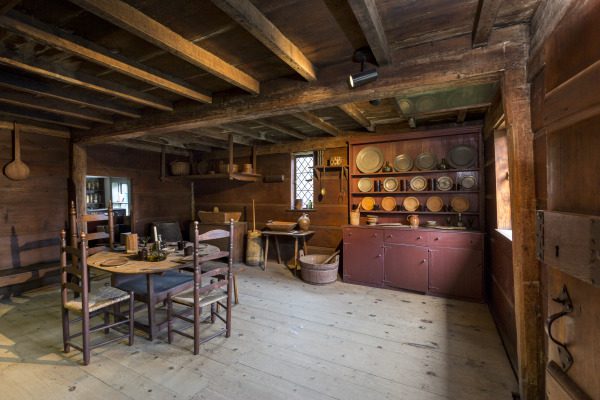
Inside, Feron, who majored in anthropology in college, explained how the phrase “sleep tight” came from maintaining beds where mattresses were supported by rope. In the kitchen, he gestured at the mortar and pestle and explained how important it was to grind the spices that came in on nearby ships and flavored meat pies and spice cakes. He shared how the average 17th- or 18th-century family might keep a “perpetual stew” boiling on the fire. The group asked all kinds of questions about tools in the massive fireplace and the beams overhead. The beams were shipped down from Casco Bay, Maine, explained Feron. “That shows the family and the city’s industrial prowess from early on,” he said.
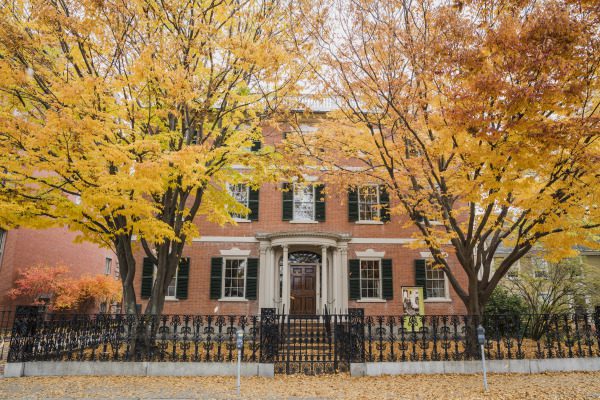
Things got a lot more elegant once the group headed into the Gardner-Pingree House and Feron rattled off floor to ceiling facts in the exquisitely decorated living room, moving from luxe window treatments to Samuel McIntire’s elaborate wood carvings. The day’s stories ranged from servants in the opulent houses to the problems arising between a mariner and his far wealthier neighbor, one of the first headline-worthy stories of gentrification in America.
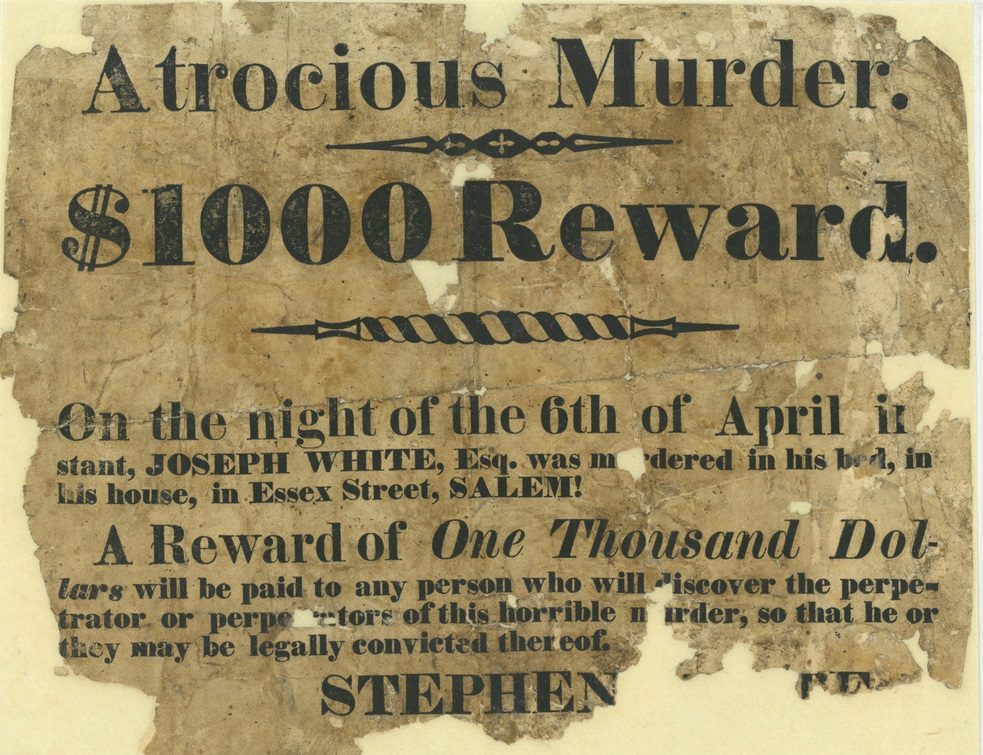
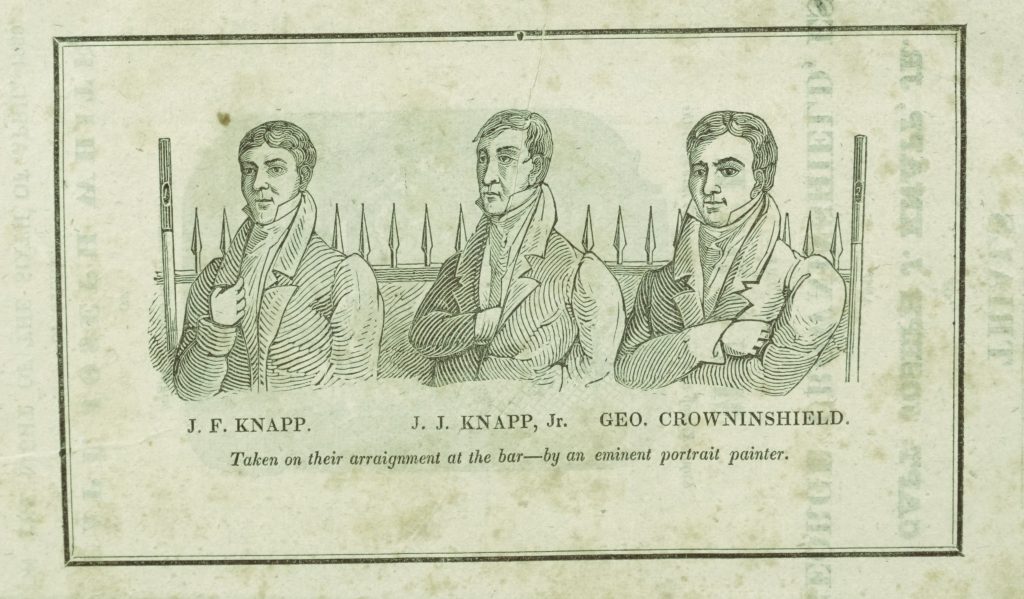
PEM’s walking tours do get more scary than roof beams and balustrades. Sinister Streets: Witch Trials, Murders and Literary Legends takes visitors through some landmarks of the 1692 trials, plus the site of a gruesome murder that made headlines in 1830 and inspired Edgar Allan Poe. On another recent October day, tourists turned up from Los Angeles, Salt Lake City, Washington, D.C. and Huntsville, Alabama to hear about the historic persecution of Salem Quakers and the sounds of the accused in the Salem jail that could be heard from the Ward House in 1692. They were also able to appreciate the architectural details of the elegant Federal-style Gardner-Pingree House, while taking in a tale of maritime money, greed, a custom-built murder weapon, forbidden love and a pair of naughty brothers.
Overall, the museum isn’t afraid to balance history and a good story. If you catch a PEM walking tour on a weekend before October 19, you can follow it with a self-guided tour of the Ropes Mansion, also known as “Allison’s house” from Hocus Pocus. (The mansion features on many Salem tours, but only PEM can give visitors an inside look.) After October 23, the museum borrows some movie magic to recreate the Halloween piles of pumpkins and other decorations from the film.
“We need to educate people,” said guide Alina Ivanova, “but at the same time, entertain them — because, for the most part, they are on vacation and would like to have some fun.”
PEM’s walking tours run select times Thursdays through Mondays until November 23. Plan your Salem visit at pem.org/tours. Browse the museum’s full roster of October events at pem.org/halloween.

Privacy Policy | © 2026, All Rights Reserved. Website designed and developed by Sperling..