Stay in the Know About Salem
Get upcoming events, things to do & seasonal news straight to your inbox.
Sign Up Now


Photo Credit: @creativecollectivema

Photo Credit: @creativecollectivema

Photo Credit: @creativecollectivema
Photo Credit: Jess Shada

Photo Credit: Jess Shada

Photo Credit: Jess Shada

Photo Credit: Kathy Tarantola


Refurnishing The House of the Seven Gables: Before and After
May 15, 2026
Written By:
Bridie O'Connell
SPONSORED CONTENT | Written by Susan Baker, House of the Seven Gables Curator of Collections
This winter, we launched a major refurnishing project at The House of the Seven Gables. Fresh wallcoverings and paint now enhance the Dining Room, Parlor, and Great Chamber of the Turner-Ingersoll Mansion, reflecting the historic periods we interpret. Every update is guided by research and authenticity, ensuring our exhibits remain engaging and accurate for visitors.
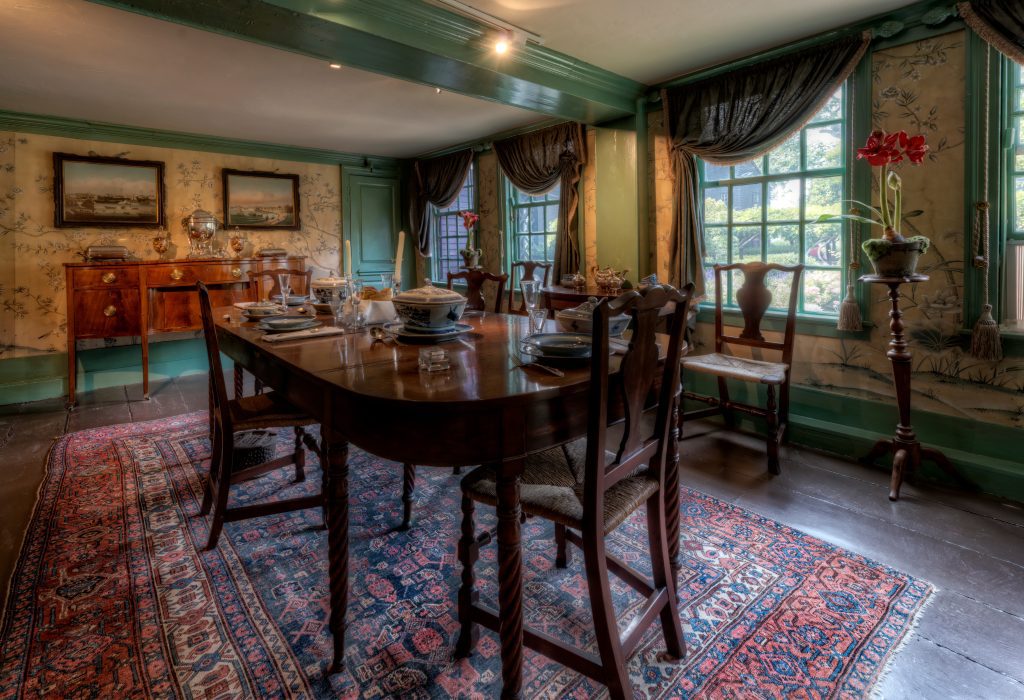
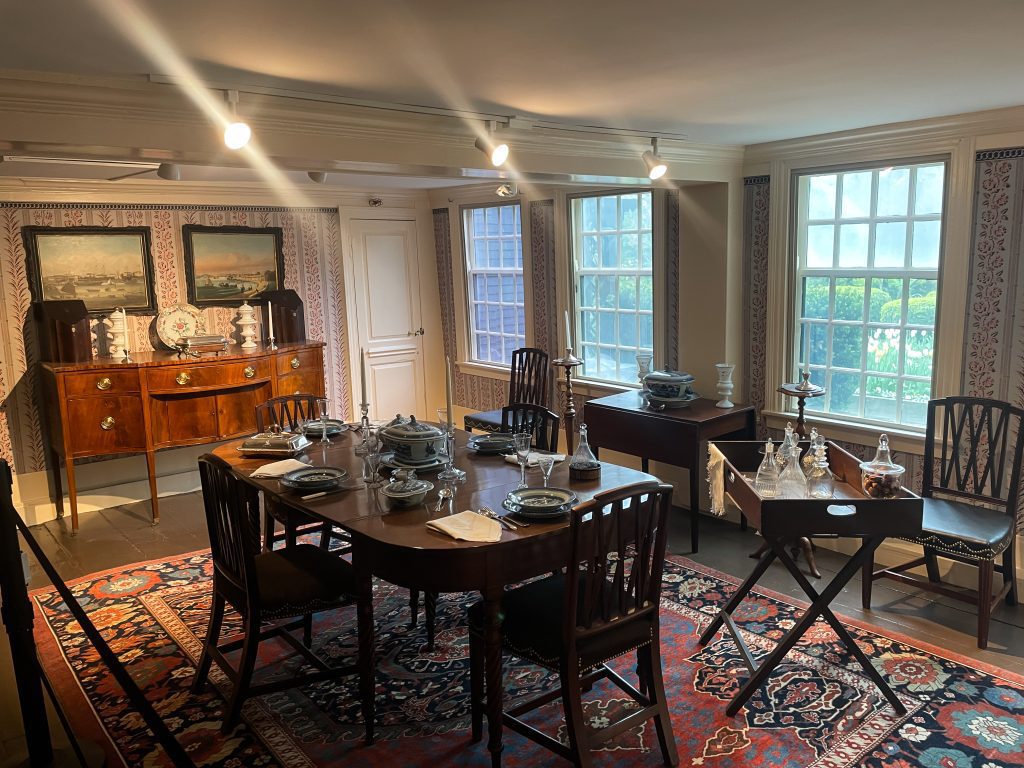
The Dining Room (1790-1810) illustrates the lifestyle of the prosperous maritime family, the Ingersolls, during Salem’s Great Age of Sail (1790–1813), when Captain Samuel Ingersoll and his family thrived through global maritime trade. The previous 1920s silk wallpaper and green woodwork were not accurate for this era. Scientific paint analysis showed cream was historically correct, and the wallpaper was replaced with hand-block-printed Plymouth Stripe and Vine, based on a late 18th-century American pattern. No fragments of wallpaper remain in the room, so this design was chosen after extensive research into period styles from comparable houses. In this case, the design originated from paper found in the Jackson House in Plymouth, MA.
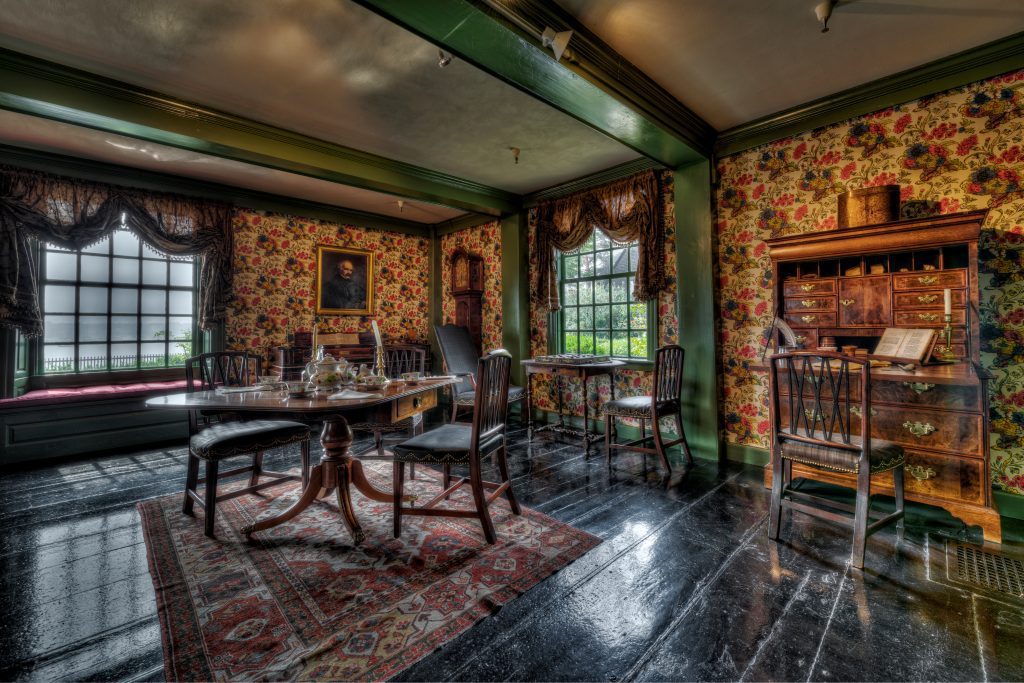
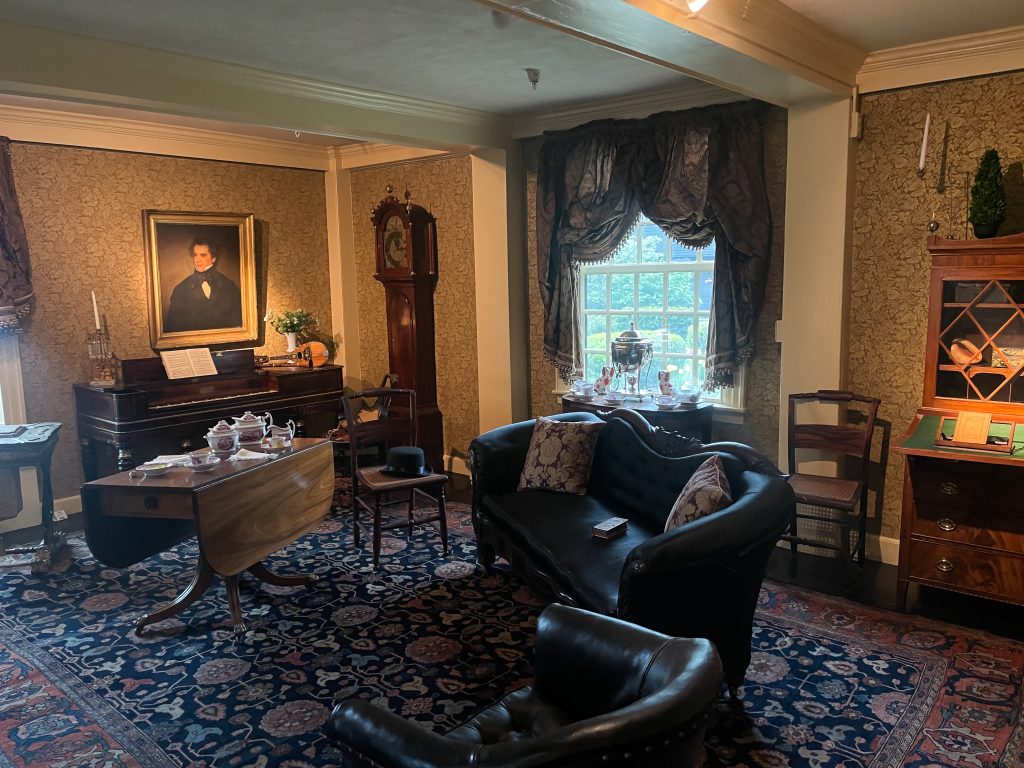
In the Parlor (1840s), visitors can step into the lively social world of Susannah Ingersoll, a prominent Salem woman, and her acquaintances of the 1840s. This space highlights her close family ties to her cousin, Nathaniel Hawthorne, and his wife, artist Sophia Peabody. The narrative of the Parlor unfolds through three notable paintings: a sweeping landscape by Sophia, a portrait of her painted by Joseph Alexander Ames, and a youthful depiction of Hawthorne. These artworks help reveal how the house inspired Hawthorne’s renowned novel, The House of the Seven Gables.
Previously, the Parlor featured wallpaper and paint colors from the wrong era. Paint analysis reveals that a yellow cream color was present during the 1840s, not the green color that had been displayed. Again, no historic wallpaper fragments exist for the Parlor. After researching 1840s styles, we chose Kennebunk Foliate, which was found in the Simpson House in Kennebunk, ME. Our new wallpaper captures the style of the era and allows the artwork to truly stand out, enriching the story of the Ingersoll-Hawthorne connection.
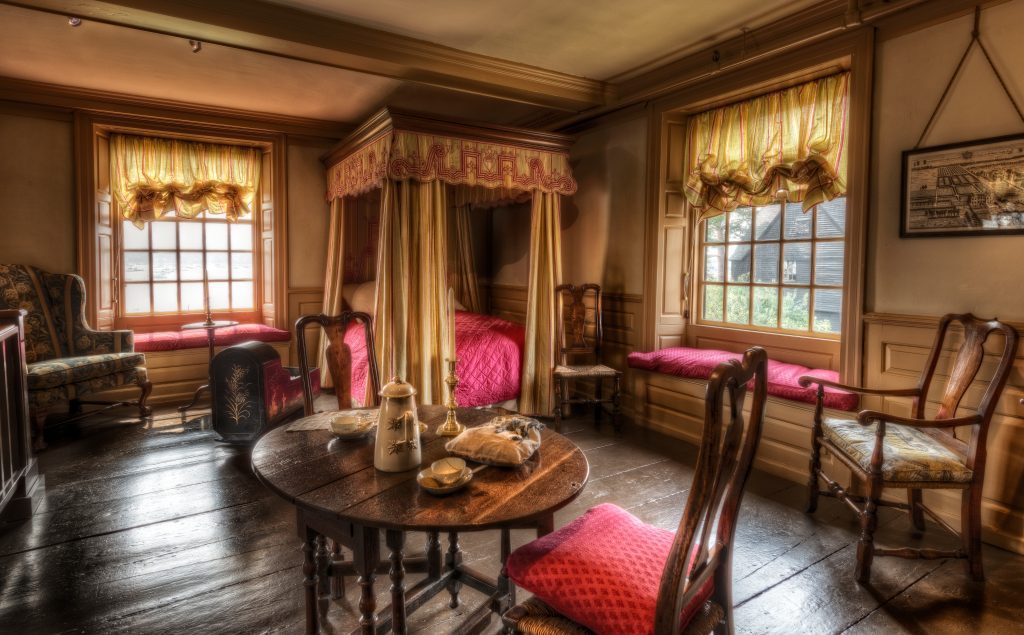
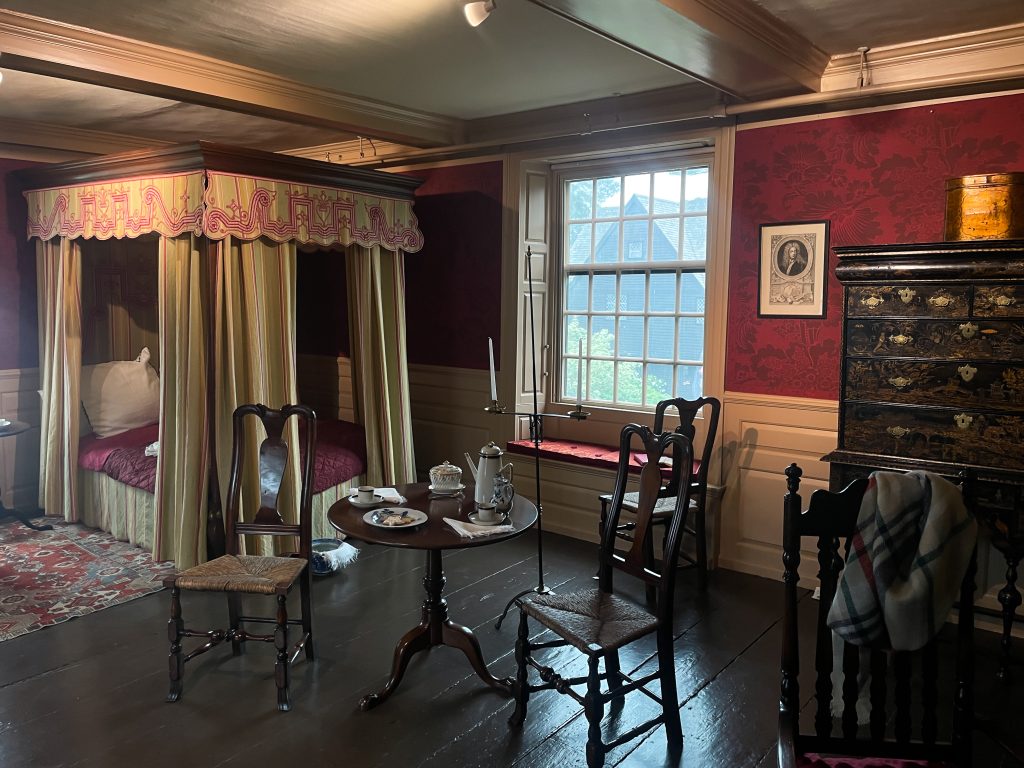
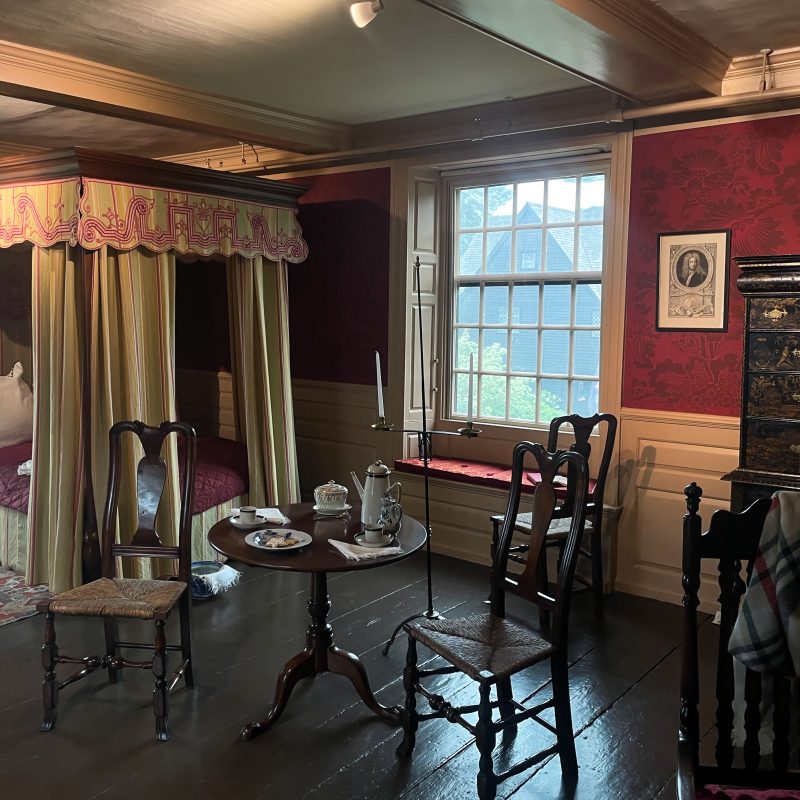
The Great Chamber brings the visitor to the 1740s and the world of the wealthy Turner family. The room reflects the Georgian style, with fine, symmetrical, high-style paneling considered some of the finest in America. As with the Parlor and Dining Room, no wallpaper fragments existed, and paint analysis confirmed a tan/cream finish. In 1740s America, wallpaper was typically imported from England and France, and the Turners likely adorned their bedroom with luxurious imported wallpaper and expensive bed hangings. For our restoration, we installed a hand-block printed wallpaper found in the Webb House in Wethersfield, CT. The paper has a flocked flowering vine with a diaper pattern, closely matching the fashionable look of the time.
Visit us this spring to experience the newly restored rooms at The House of the Seven Gables in person! Plan your visit today at 7Gables.org

Privacy Policy | © 2026, All Rights Reserved. Website designed and developed by Sperling..